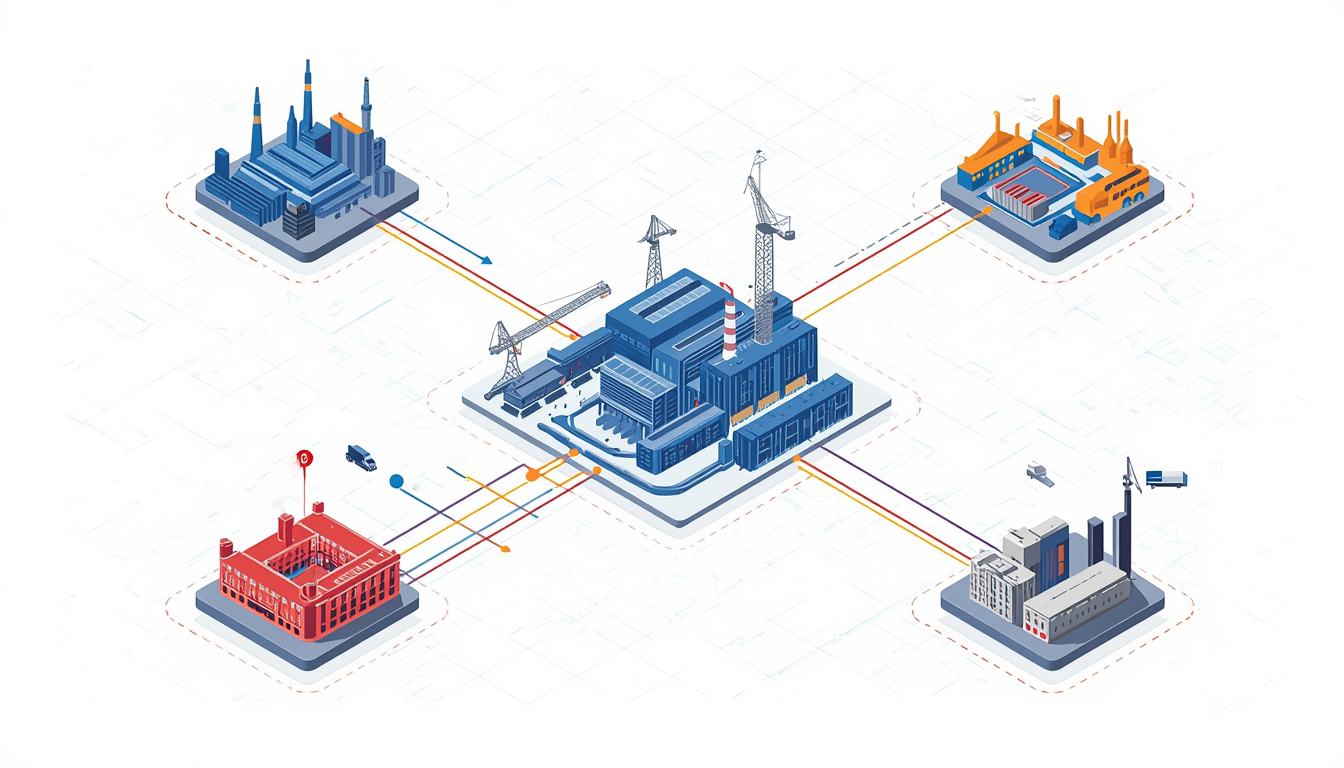
As labor costs rise in Western Europe and supply chains shorten, Eastern Europe has emerged as a compelling industrial destination. Here's what you need to know.
For decades, the arithmetic of global manufacturing pointed companies east and far. That calculus is shifting. Supply chain disruptions, geopolitical volatility, and a fundamental reassessment of what "total cost" actually means have pushed European manufacturers to look closer to home.
According to Inverto research, 57% of European companies already source goods from Eastern Europe, and 32% plan to relocate production activities to the region in the coming years.
Poland: Europe's Industrial Anchor
Poland ranks third globally in nearshoring attractiveness on the Savills Nearshoring Index. Manufacturing contributes approximately 20–25% of GDP and employs around 2.8 million people. Automotive alone employs over 213,000 workers and accounts for roughly 8% of GDP.
LG Energy Solution runs one of the world's largest EV battery factories in Wroclaw. Southern Poland's Aviation Valley cluster encompasses 194 companies employing over 35,000 people, generating approximately 90% of Poland's aerospace output. Components produced there are found in nearly every commercial aircraft flying today.
FDI inflows reached USD 27 billion in 2024. Poland's economy grew at around 2.9% in 2024. Labor costs remain 60–70% lower than in Germany — a differential significant enough to change the economics of production for most manufacturing categories.
Romania: The Emerging Contender
In 2024, FDI projects in Romania surged by 57% to 94. Manufacturing accounts for 41% of all FDI projects. Dacia produces over 322,000 vehicles annually; Ford Otosan's Craiova facility produces approximately 191,000 vehicles per year. Continental alone employs more than 20,000 people.
Romania has over 250,000 software developers as of 2024, with a strong tradition of STEM education. The country has emerged as a genuine hub for automotive software development at costs substantially below Germany, France, or the Netherlands.
The Shared Proposition: Proximity That Compounds
Goods manufactured in Poland or Romania reach Germany, France, or Benelux in 24 to 72 hours by road. The equivalent from Vietnam or China takes four to six weeks by sea. EU membership means tariff-free movement, regulatory harmonization, and GDPR-aligned data handling.
For European manufacturers facing pressure to shorten supply chains and reduce geopolitical risk, the CEE proposition is effectively: most of the cost advantage you were getting from Asia, almost none of the supply chain distance.
The Honest Picture
In Poland, labor costs measured in euros rose by 59% between 2020 and 2024. Annual wage increases of 10–20% for software developers have been common across CEE. The cost advantage over Western Europe remains substantial, but the differential is narrowing.
The manufacturers that succeed in CEE are those that source the right work there — complex engineering requiring skilled professionals or precision manufacturing requiring educated technicians — rather than treating the region as a generic low-cost substitute for Asia.
The strategic window is not permanent at current terms. The wage convergence trajectory is consistent, and for European manufacturers evaluating supply chain restructuring, the logic favors moving now.
Tags
Sources
Savills Nearshoring Index 2024; ING Think; EY FDI Attractiveness Romania 2024; KPMG Investment in Poland 2024; Polish Investment and Trade Agency 2024 data; Inverto nearshoring research.